










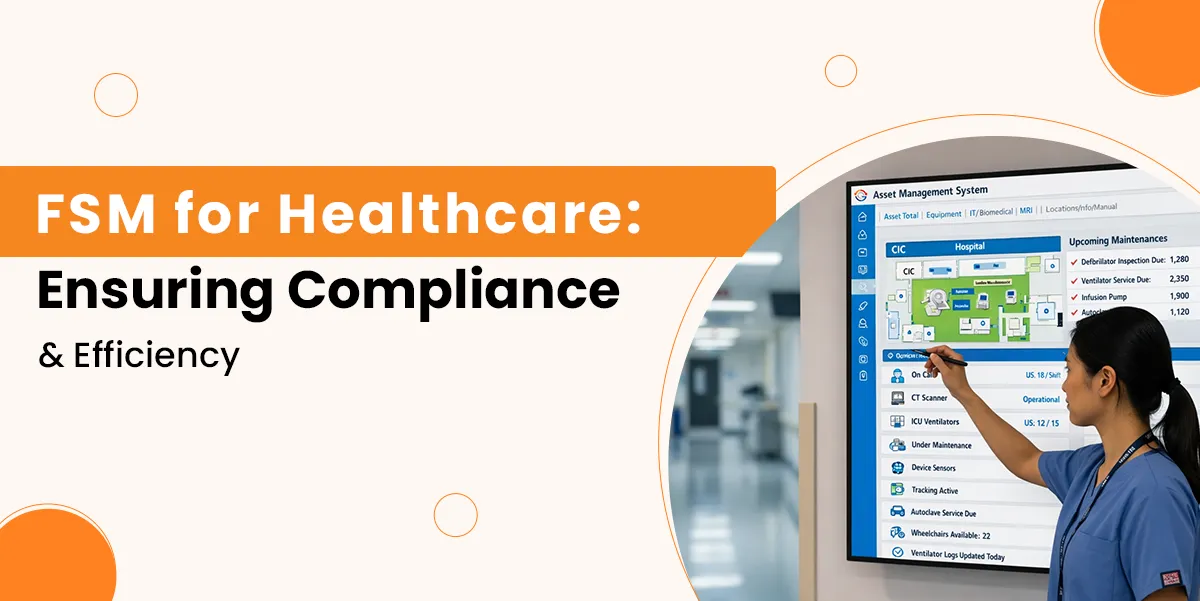
Healthcare depends on reliability, as every device must work in the same way as expected. Every inspection must be completed on time. Since every service record must be accurate and accessible. When maintenance fails, patient care can be delayed, and compliance risks increase.
Hospitals and clinics deal with a huge number of medical assets in a number of departments. That’s why strong systems are necessary for managing technicians, monitoring inspections, and meeting regulatory standards. This is where healthcare field service management software becomes essential, as it provides structure, visibility, and accountability across service operations.
By supporting the healthcare workforce, medical equipment management a well-designed system, ensures compliance while improving efficiency. In today’s healthcare environment, structured field service management is not optional, but it is fundamental to safe and sustainable operations.
What is Healthcare Field Service Management Software?
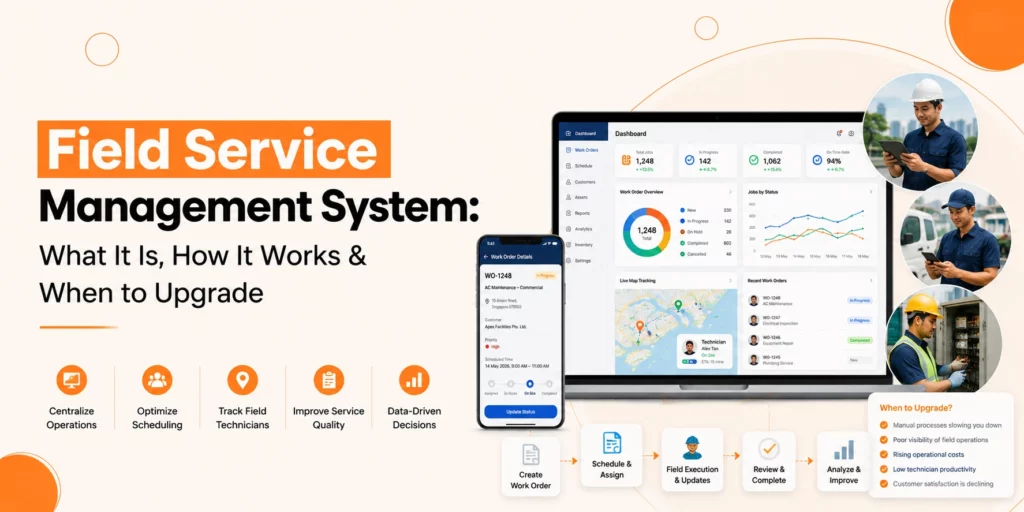
Healthcare field management software is an organised electronic system which will help hospitals and clinics control service activities for medical hospitals and supplies. It centralises all work orders, preventative maintenance schedules, tech support assignments, as well as compliance records, all within one platform.
Organisations track assets, document repairs, and keep track of performance using this system, rather than relying on paper logs and scattered spreadsheets. It can also help with keeping track of healthcare upkeep by making certain inspections and servicing are finished on time.
Healthcare field management software enhances visibility and control, minimising downtime and enhancing accountability. It offers the foundation of safe healthcare equipment service management while sustaining long – term operational stability.
Why Does Healthcare Need Specialised FSM Solutions?
Healthcare service environments differ from other industries because safety, regulation, and precision are constant priorities. Generic systems often lack the structure required to meet these demands.
Regulatory Complexity
Healthcare providers must follow strict maintenance schedules and documentation standards. Missed inspections can lead to penalties and operational disruption.
A healthcare compliance FSM system supports automated reminders and structured workflows, which reduce the risk of oversight. Although healthcare maintenance tracking makes sure every inspection is logged and traceable.
Critical Equipment and Patient Impact
Moreover, hospitals depend on advanced diagnostic and life-support equipment. When a failure occurs or repairs are delayed, it affects treatment schedules.
Due to this specialised healthcare field, service management software prioritises high-risk assets and ensures maintenance aligns with regulatory standards.
Operational Pressure
At the same time, service teams manage large inventories and urgent requests. Efficient medical equipment management requires real-time visibility and controlled scheduling.
Overall, specialised solutions support healthcare workforce management and compliance while maintaining operational stability in high-pressure healthcare settings.
How to Ensure Compliance with a Healthcare Compliance FSM System
Compliance depends on consistent documentation, accurate scheduling, and secure record keeping.
Automated Preventive Maintenance
A healthcare FSM system schedules inspections according to manufacturer guidance and regulatory timelines.
Automated alerts notify teams before deadlines. Healthcare maintenance tracking ensures tasks are completed and digitally recorded, which helps in reducing reliance on manual reminders.
Audit-Ready Documentation
During audits, it is equally important that organisations are prepared to present clear service histories. The medical equipment service management software keeps time-stamped reports, service logs, and technician information in a structured format.
Additionally, the healthcare service management software centralises these records within a single secure system, which makes retrieval efficient and simple.
Data Protection and Control
At the same time, protecting sensitive service data is important. Access permissions and structured reporting protect sensitive service data. Consequently, the compliance FSM system ensures that only authorised users can modify records.
Also, with automation and secure documentation, compliance becomes a controlled process rather than a reactive response.
How to Improve Medical Equipment Service Management
Reliable equipment performance depends on structured service coordination. Without it, delays and unexpected failures can disrupt clinical operations.
Smart Scheduling and Dispatch
To start with, medical equipment management software assigns jobs based on technician skills, certifications, and availability.
As a result, it improves response times and increases first-time fix rates. In addition, healthcare field service management software balances workloads to prevent delays.
Proactive Maintenance Planning
Preventive service is equally important as it keeps you from unexpected breakdowns. Inspections take place at planned times through consistent healthcare maintenance tracking, not in response to faults.
As a result, potential problems are identified early on, keeping repair costs controlled and reducing disruption.
Real-Time Operational Visibility
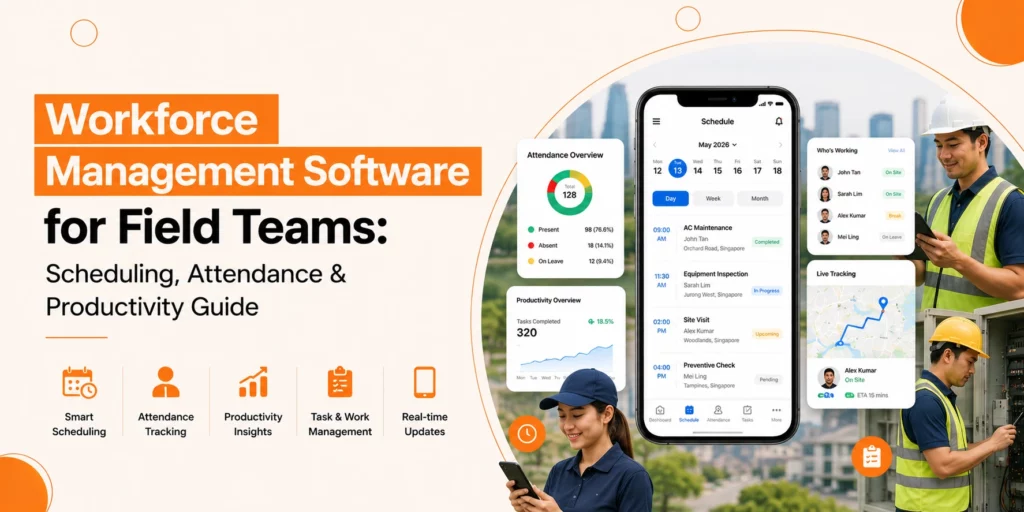
At the same time, managers need clear insight into service progress. Real-time dashboards display open tasks, equipment status, and technician assignments.
Therefore, decision makers can adjust schedules quickly and allocate resources where they are needed most.
Overall, by integrating structured scheduling and proactive planning, equipment service management becomes predictable. Reduced downtime supports consistent clinical operations and improves overall efficiency across healthcare facilities.
How to Strengthen Healthcare Workforce Management
Effective medical workforce management ensures technicians operate efficiently and remain compliant with certification requirements.
Certification and Skill Tracking
Technicians must maintain valid training credentials. Medical workforce management systems track certification expiry dates and training records. Automated reminders prevent compliance gaps. Healthcare service management software links technician qualifications with assigned tasks.
Workload Distribution
Balanced scheduling prevents overloading specific team members. Medical equipment service management software provides visibility into job allocation and response times. Managers can redistribute tasks when needed.
Performance Monitoring
Service metrics reveal trends in repair duration and preventive maintenance completion. Leaders use this data to identify training needs and improve efficiency.
When workforce management integrates with healthcare tracking, organisations gain better control over staffing decisions. Structured oversight strengthens accountability and supports safe equipment servicing across departments.
Choosing the Right FSM Solution for Healthcare
Selecting the right system requires careful evaluation.
Compliance and Security Capabilities
A reliable healthcare FSM system should include automated maintenance scheduling, audit trails, and secure data storage. Maintenance tracking must be clear and accessible.
Workforce and Asset Integration
The solution should support healthcare workforce management alongside medical equipment management. Skill tracking, workload balancing, and asset lifecycle monitoring should operate within one environment.
Scalability and Reporting
Healthcare field service management software needs to adjust to growing asset inventories and changing regulations. Effective reporting tools provide you with visibility into compliance status, expenses, and overall performance.
A medical equipment service management system must offer clear insights that aid in operational choices and long-range planning. Sustainable efficiency calls for aligning the system with the health priorities.
Conclusion
Precision and accountability are crucial to effective healthcare operations. Coordination of regulatory and workers compliance, equipment dependability, and regulatory compliance should be in alignment. Risk increases as well as efficiency decreases with no structured systems.
The field service management software used by healthcare organisations provides the framework that allows for this particular complexity to be handled. It enhances the management of the healthcare workforce, improves the management of medical equipment, and also supports the monitoring of healthcare maintenance by way of a reliable healthcare compliance FSM system.
Healthcare organisations get better control of their operations by combining preventive maintenance, organised documentation, as well as real time visibility. In the end, they will protect patient safety as well as provide sustainable performance.