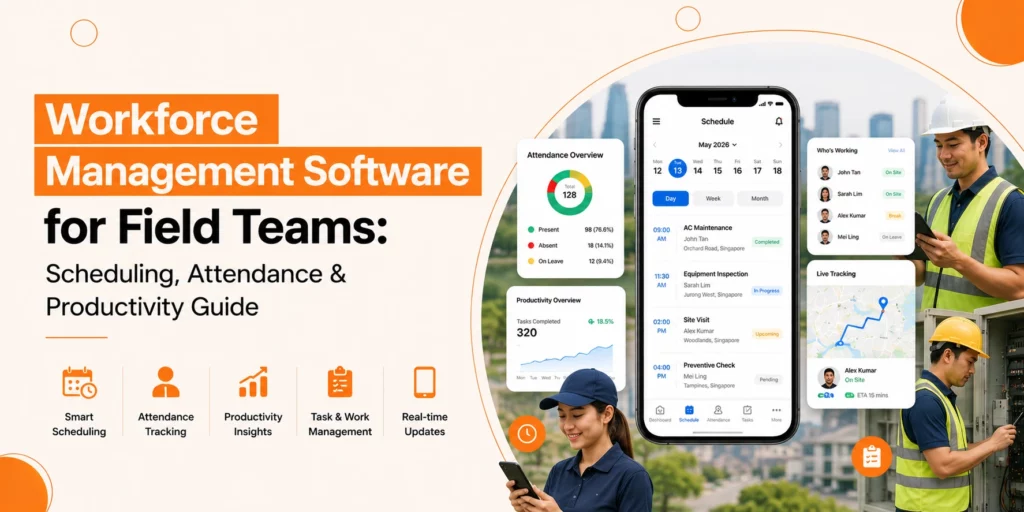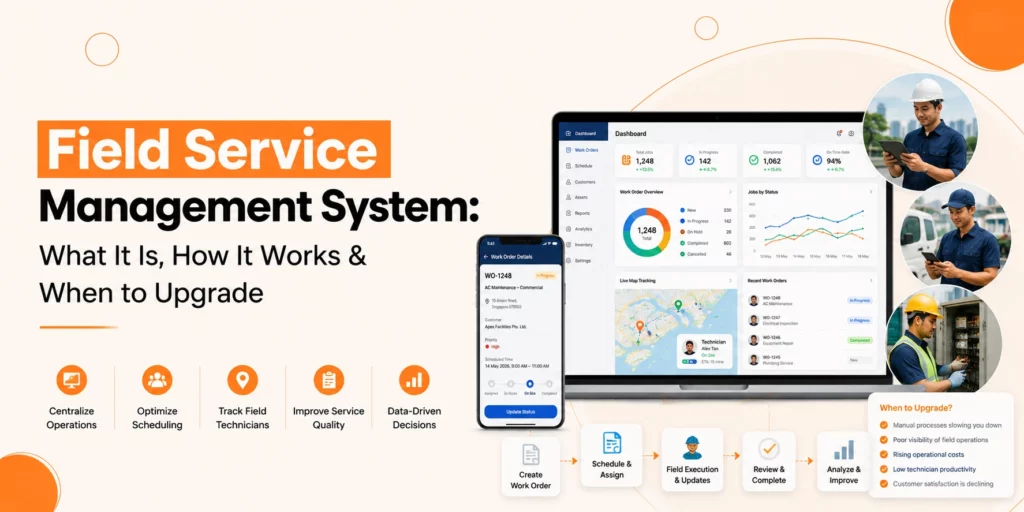












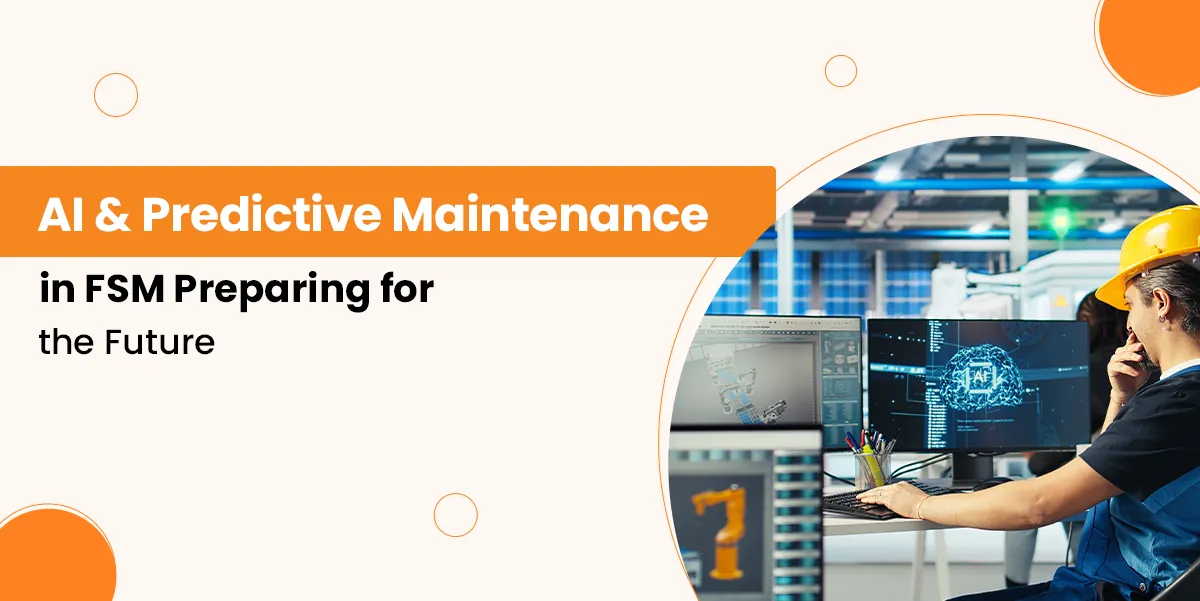
Field service now extends beyond its original purpose of solving problems because it focuses on preventing problems from occurring. It is about preventing them. Nowadays, organisations are looking to decrease operational interruptions while they work toward improved scheduling methods and enhanced operational monitoring systems.
AI for field service drives this transformation by allowing teams to extract useful information from their data, which improves their decision-making abilities. The system responds quickly while it makes operations more efficient and prevents unexpected equipment breakdowns.
The equipment management system now operates through predictive maintenance, which uses data to modify its operational approaches. Businesses can prevent expensive system failures by taking action right away instead of waiting for breakdowns to occur.
In this blog, we will explore the future development of field service management AI through predictive strategies and demonstrate how businesses should get ready for these changes.
The Evolution of Field Service Management
The Reactive Approach
Field service once relied on a reactive model. A fault would occur, and a technician would be sent to fix it, which often caused delays and unexpected downtime. That’s why the costs were higher, because issues were handled only after they became serious.
The Shift to Scheduled Maintenance
To improve this, businesses introduced scheduled maintenance. Equipment was checked at fixed intervals, regardless of its actual condition. This reduced some risks but created new challenges as teams sometimes carried out unnecessary work while some issues still went unnoticed between inspections.
The Rise of Proactive Service
Today, field service focuses on a proactive approach. Teams aim to identify issues before they lead to failure.
Maintenance is planned based on real equipment conditions, which reduces downtime and improves overall efficiency.
The Role of Field Service Management AI
This shift is supported by field service management AI. It analyses data and provides useful insights. This helps teams make better decisions and manage service operations with greater accuracy.
Read Also: How AI is Revolutionising Field Service Management: Smarter Operations, Happier Customers
Understanding Predictive Maintenance
What Makes It Different
Predictive maintenance uses real-time and historical data to detect early signs of failure. It focuses on actual equipment condition rather than fixed schedules. This approach ensures that maintenance happens:
- Only when needed
- Before breakdowns occur
Predictive Maintenance Using AI
Predictive maintenance using AI works by analysing patterns in equipment data. The process includes:
Data Collection
Sensors gather information such as temperature, vibration, and pressure.
Data Analysis
Systems study this data to identify unusual patterns or trends.
Prediction and Action
When a risk is detected, the system alerts the team. A service task can be scheduled in advance. This method reduces uncertainty and improves reliability.
Why AI for Field Service Is Essential
Growing Complexity in Operations
The current operational framework of field services has developed into a more intricate system than what existed in previous times. Teams handle numerous assets across various locations while processing their daily service requests.
The system becomes more difficult to manage because of its wide scale, which also creates longer waiting periods and more frequent operational mistakes. The manual systems fail to meet operational requirements, which results in delayed responses and unaddressed problems.
The Role of AI for Field Service
The field service operational complexity reaches its peak because AI systems monitor all incoming activities.
Also, the system processes large amounts of data at high speeds, which enables teams to identify patterns while detecting risks during their early stages.
The system provides fast decision-making support, which helps users achieve better results when they need to handle urgent service requests.
Moving Towards Precision
Businesses can reduce their guesswork through improved data quality and a better understanding of their information.
The team members achieve better task planning abilities while their issue response speed improves and their operational processes become more streamlined.
The organisation experiences better operational performance through this transition, which produces better dependability in their service delivery.
Core Benefits of Predictive Maintenance
Reduced Downtime
Unexpected failures disrupt operations. They lead to delays and loss of revenue. With predictive maintenance, issues are resolved before they cause disruption.
Cost Efficiency
Emergency repairs often require urgent resources, which also increase labour and travel costs. Predictive strategies reduce these sudden expenses and improve cost control.
Extended Asset Life
Early detection prevents severe damage. Equipment stays in better condition for longer.
Better Resource Planning
Service teams can plan work based on actual needs. This improves efficiency and reduces wasted effort.
AI Automation for Field Service
Streamlining Daily Operations
Service teams handle their daily workload through various standard operational activities, which they must perform. The process requires creating jobs while maintaining their status, producing reports, and staying in touch with customers. The process of manual task management consumes hours while people face obstacles that cause them to miss vital steps in their work.
The field service operation benefits from AI automation because the system performs regular tasks according to its planned structure, which reduces operational complexity. Also, the system generates work orders automatically when it identifies an issue, and it tracks job progress through instant updates while it sends messages to both field personnel and service users.
Additionally, the system enables teams to achieve faster response times while they maintain their operational order. With it, the process enables technicians to spend their time on essential service tasks instead of handling administrative work. The operation runs with better efficiency because of this system.
Improving Workflow Consistency
Field service operations need to maintain consistent operational standards for their work activities. However, organisations experience rising mistakes and falling service quality when their operational systems diverge from each other.
To address this, AI for field service ensures that each task follows a defined workflow. The system records all activities, helping staff understand their roles while also creating clear lines of responsibility.
As a result, teams that work with structured workflows will maintain their operational stability while they provide dependable service to their customers for all their work tasks.
AI Tools for Technician Scheduling
Smarter Job Allocation
Field service scheduling requires businesses to handle a complex operational system. The system requires multiple operational components to function at their scheduled times. Managers need to consider technician skills, current location, and job priority before assigning any task. Manual execution of this process leads to delayed results, which produce ineffective decision-making.
The AI scheduling system for technicians solves this problem by running complete analyses of all relevant factors that appear in the scheduling process. The system uses data analysis to allocate work assignments to technicians who possess the right abilities for each task.
Moreover, the system prevents site confusion by delivering the correct personnel to the correct site location. The system shortens travel distances because it stops staff members from making useless travel journeys between locations. Consequently, the system enables teams to finish their work activities at a better speed while sustaining their current level of service excellence.
Real-Time Scheduling Adjustments
The conditions that occur in the field become unstable during fast changes. The work schedule needs more time than planned because an emergency request arrived without warning. The present scheduling system cannot adapt to these emerging circumstances.
However, smart systems powered by AI for field service respond to these shifts in real time. The system handles its operations by changing its routes, assigning new tasks to personnel, and creating updated work schedules.
As a result, the organisation maintains smooth operations through this system, which enables teams to complete their planned work activities during their scheduled work hours.
The Role of Field Service Management AI
Centralised Operations
Field service management systems gather all service-related data into a singular database, which operates as a centralised system. The system provides managers with an immediate overview of their daily operations, which they can access without switching between different systems.
Teams have the ability to track their current work assignments while tracking their field technicians and keeping an eye on their equipment status through their real-time monitoring system.
The system provides complete visibility, which helps users prevent both confusion and delays in their operations. Managers can respond quickly to changes and make informed decisions based on accurate information.
Data-Driven Insights
Data now plays a key role in guiding service operations. Systems use stored information to create better decision-making processes instead of maintaining basic storage functions.
The process results in better forecasting abilities, improved planning methods, and enhanced performance monitoring systems.
Teams have developed the ability to identify patterns, which enables them to predict service needs, and they can modify their plans through enhanced assurance.
Enhanced Customer Experience
Customers expect fast and reliable service. Smart systems improve communication by sharing accurate arrival times and providing real-time updates.
The system enables proper technician selection through its ability to analyse incoming requests and provide staff members with essential information.
The system helps prevent patients from needing to come back by sending the correct technician who carries all the necessary details. The process creates an improved service system that establishes customer confidence through regular trust-building experiences.
Business Impact of Predictive Maintenance
Operational Efficiency
Efficient systems allow businesses to handle more work without increasing resources.
Improved Service Quality
Fewer breakdowns mean better service delivery. This strengthens customer relationships.
Competitive Advantage
Businesses that adopt predictive strategies can respond faster and perform better than competitors.
The Future of AI in Field Service Management
Predictive Maintenance Using AI
AI-based predictive maintenance systems will become more important when systems achieve better performance through faster operations and enhanced precision. Organisations will obtain better equipment health information through their improved data processing abilities and their enhanced system connectivity.
Teams can identify risks at an early stage, which enables them to take preventive measures before actual failures happen. The system will achieve operational stability while reducing downtime occurrences, and it will develop into a system that provides better maintenance scheduling accuracy with each passing day.
AI Automation for Field Service
AI automation for field service will spread to all fundamental business activities, which will decrease the amount of work that needs to be done manually. The process of creating jobs, updating them, and generating reports will become more efficient through this system.
The system will create better team cooperation, which will produce uninterrupted operational processes. Technicians need to perform their tasks because they generate better service results through their direct customer work, which results in fewer mistakes and standardised field operation results.
AI Tools for Technician Scheduling
AI tools for technician scheduling will continue to evolve, making planning more accurate and efficient. The systems will distribute work assignments through their analysis of customer needs, together with staff capabilities and their current positions.
The system will improve its route planning capabilities while continuously updating its scheduling system through instant responses to operational changes.
The system will decrease travel distances while it speeds up emergency responses, and it will match each task with the appropriate technician, which results in improved operational performance and customer satisfaction.
Read Also: Is AI the Future of Field Service Management?
Conclusion
Overall, Field service is entering a new phase where organisations now work proactively instead of their previous reactive approach to business operations. Also, the field service AI system enables organisations to make better choices while gaining better operational command.
The field service management AI system, it provides better operational control through improved visibility, which boosts organisational efficiency. Predictive maintenance reduces downtime and supports long-term performance.
The organisations that take action today will build better future readiness. The team needs to establish its service foundation through data analysis and automation processes, together with strategic planning methods.
The transition has started its progress. The next step is to embrace it with a clear and practical approach.