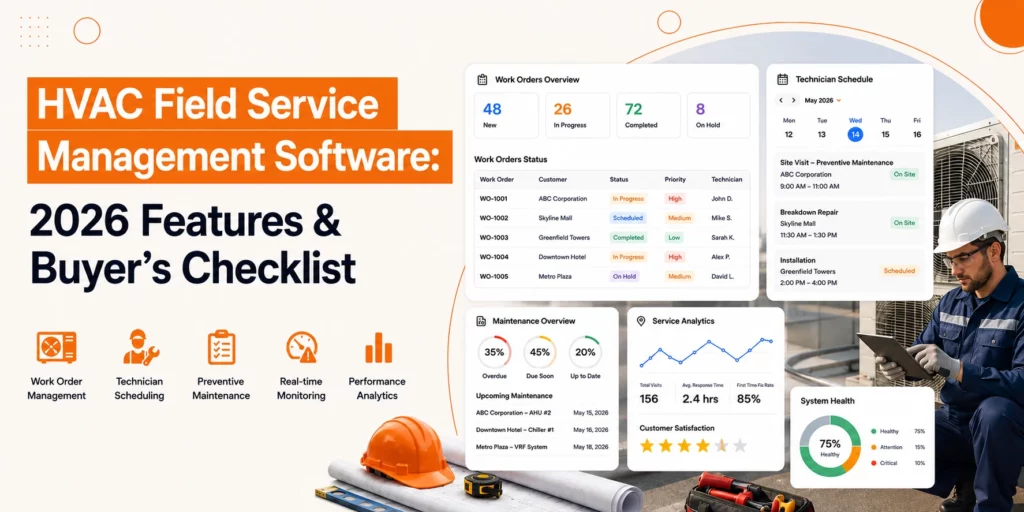












For most HVAC contractors, HVAC field service software is the better choice because it is built around the way HVAC businesses operate. While generic field service management (FSM) software can handle basic scheduling, work orders, and invoicing, it often lacks the industry-specific features needed to manage equipment history, preventive maintenance, technician workflows, and recurring service contracts.
Running an HVAC business means handling much more than repairs and installations. Every day brings new service calls, urgent breakdowns, maintenance visits, customer requests, and team schedules.
This is where field service software and generic field service management (FSM) platforms come into the picture. Both help businesses organise daily operations, but they are not built for the same purpose.
In this guide, we compare both options, explain the key differences, and help you decide which system fits your business.
What Is HVAC Field Service Software?
HVAC field service software functions as a specialised tool that allows heating, ventilation, and air conditioning contractors to perform their work. The software enables HVAC businesses to run their daily operations through its service call scheduling, maintenance contract management, and equipment history tracking features.
The software system operates differently from standard business software because it concentrates on managing operational processes that belong to specific industry sectors. The system stores all customer data together with work information, staff availability, and equipment maintenance records within a unified database.
Businesses select this software type because it cuts down their document handling while enhancing their communication systems and providing technicians with essential information to finish their work.
What Is Generic Field Service Management Software?
Generic field service management software works across many industries. It can support plumbers, electricians, cleaners, pest control companies, landscaping businesses, and many other service providers.
Most platforms include common features such as:
- Job scheduling
- Work order management
- Customer records
- Technician assignments
- Mobile access
- Invoicing
These tools help businesses organise field work, but they may not include features designed for HVAC contractors.
HVAC Field Service Software vs Generic FSM
The debate around HVAC field service software vs generic FSM comes down to one question.
Do you need software that matches your daily HVAC processes, or do you only need basic field service management?
Both systems offer value, but the differences become clear as your business grows.
Industry-Specific Workflows
HVAC businesses deal with equipment servicing, maintenance contracts, warranty tracking, refrigerant records, and seasonal demand.
A dedicated system supports these tasks without extra setup.
Generic software often requires custom fields or manual work to achieve similar results.
Technician Support
HVAC technicians need access to equipment history, previous repairs, replacement parts, and customer notes while working on-site.
A field service software for HVAC business often stores this information in a simple format that technicians can access during every visit.
Generic software may provide customer records, but it lacks industry-focused job details.
Maintenance Contracts
Many HVAC businesses rely on recurring maintenance agreements.
Industry-specific systems help schedule repeat visits, send reminders, and track completed services.
Generic systems can schedule recurring work but may not offer maintenance tools built for HVAC operations.
Why Contractors Choose HVAC Service Management Software
As an HVAC business expands, managing more technicians and customers becomes harder.
This is why many contractors invest in HVAC service management software instead of relying on basic systems.
Some of the biggest benefits include:
Better Scheduling
The scheduling process achieves its purpose by decreasing travel time, which leads to better operational performance throughout the day.
The dispatchers use technician availability and their locations and skill sets to determine which tasks they should assign.
The system reduces waiting times for customers, which leads to improved customer satisfaction.
Improved Customer Records
Each customer possesses unique equipment along with their individual service background, their specific warranty coverage, and maintenance scheduling.
The organisation of these records enables technicians to perform their job preparation before they reach the worksite.
The system generates an improved customer experience by using its operational features.
Faster Communication
The staff at the office needs to stay in contact with the technicians who work in the field at all times.
The shared system enables all users to see job updates, notes, and completed work immediately after they become available.
Key HVAC Service Management Features
Before choosing any solution, contractors should understand the most valuable HVAC service management features.
Equipment History
- Each service visit creates valuable information.
- Technicians can review previous repairs, replacement parts, maintenance dates, and inspection notes before starting work.
Preventive Maintenance
- Routine servicing keeps customer equipment working well.
- The software can schedule maintenance visits based on contracts or service intervals.
Work Order Management
- Work orders should include customer details, equipment information, job notes, and required tasks.
- This helps technicians complete jobs with fewer questions.
Mobile Access
- Technicians spend most of their day in the field.
- Mobile access allows them to receive jobs, update progress, collect customer signatures, and close work orders from one device.
Inventory Tracking
- Many contractors carry replacement parts in service vehicles.
- Tracking inventory helps reduce delays caused by missing components.
HVAC Scheduling and Dispatch Tools
Scheduling remains one of the biggest challenges for growing HVAC businesses.
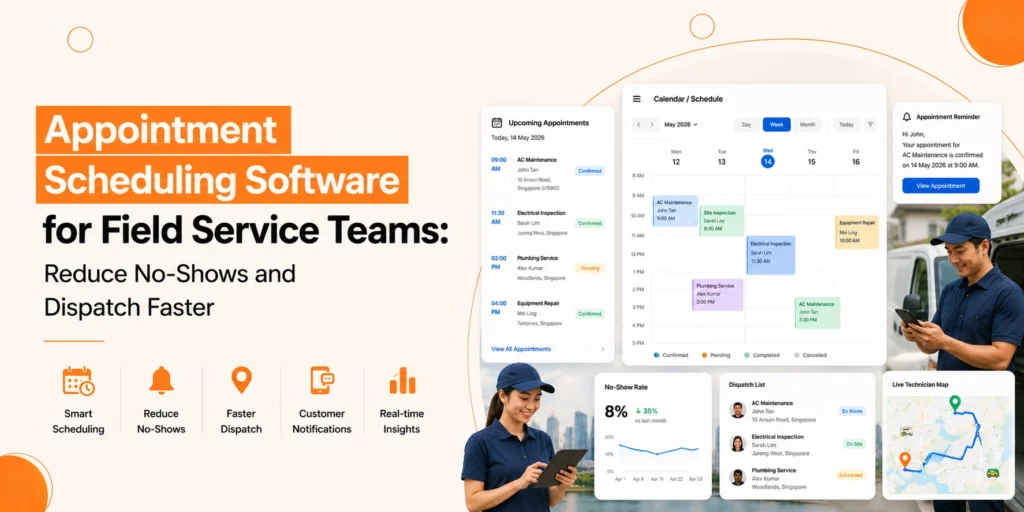
Good HVAC scheduling and dispatch tools help office teams assign jobs without confusion.
Some common advantages include:
Smarter Job Allocation
- Jobs can be assigned according to technician skills, location, and availability.
- This reduces travel time and improves daily efficiency.
Emergency Call Handling
- Emergency repairs often interrupt planned schedules.
- Flexible dispatch tools make it easier to move jobs while keeping customers informed.
Route Planning
- Better route planning allows technicians to complete more work each day.
- Shorter journeys also reduce fuel costs and vehicle wear.
The Role of an HVAC Technician Management System
Managing technicians becomes harder as teams grow.
An HVAC technician management system helps monitor workforce performance without creating extra paperwork.
It supports:
- Technician schedules
- Job completion records
- Certifications
- Skills tracking
- Leave management
- Performance reporting
Managers gain better visibility across the entire workforce.
Technicians also receive clearer daily instructions.
HVAC Dispatch Software Comparison
A good HVAC dispatch software comparison should focus on business needs instead of feature lists alone.
Ease of Use
- Software should be simple for office staff and field technicians.
- Complex systems often slow adoption and create training challenges.
Industry Fit
- HVAC businesses have unique service processes.
- Software designed around these workflows often requires less customisation.
Scalability
- Choose software that supports business growth.
- Adding technicians, vehicles, and customers should remain simple.
Reporting
- Business reports help owners understand job performance, revenue, maintenance work, and technician productivity.
- Better reporting supports stronger business decisions.
Customer Experience
Customers expect appointment updates, accurate arrival times, and complete service records.
Software that supports these expectations helps improve customer relationships.
Field Service Software for HVAC vs Generic Software
When comparing field service software for HVAC with generic alternatives, contractors should consider their daily operations.
Generic Software May Suit Businesses That:
- Have small teams
- Handle simple service jobs
- Do not offer maintenance contracts
- Need basic scheduling and invoicing
HVAC Software May Suit Businesses That:
- Manage many technicians
- Offer preventive maintenance
- Track customer equipment
- Handle recurring service visits
- Need industry-specific reporting
Business growth often changes software requirements.
What works for a small team may not support a larger operation.
How Software Supports Business Growth
- The right system does more than organise work.
- It creates consistent processes across the business.
- Office staff spend less time chasing paperwork.
- Technicians receive complete job information before arriving.
- Managers gain better visibility into daily operations.
- Customers receive faster service and clearer communication.
- These improvements create stronger long-term business performance.
What are the Common Mistakes When Choosing Software
Many contractors select software based only on price.
This often creates problems later.
Instead, consider:
Ignoring Future Growth
- A solution should support your business over the next several years.
- Changing software later often requires time and effort.
Overlooking Industry Needs
- Generic software may appear cheaper at first.
- Extra manual work can reduce those savings over time.
Choosing Too Many Features
- Not every business needs every feature.
- Focus on tools that solve your current challenges while supporting future growth.
Questions to Ask Before Buying
Before making a decision, ask yourself these questions:
- How many technicians do we manage?
- Do we offer maintenance contracts?
- How many service calls do we complete each day?
- Do technicians need equipment history on-site?
- Do we plan to expand our business?
- How important is mobile access?
You should also review a detailed HVAC buyer checklist before comparing available solutions. It helps identify the features your business needs instead of paying for functions you may never use.
What is the Importance of Equipment Records
Equipment records become more valuable with every completed service visit.
Keeping detailed histories allows technicians to identify recurring faults and recommend suitable maintenance plans.
Many contractors also connect their service records with an asset tracking system to monitor equipment, service assets, and installed units across multiple customer locations. This creates better visibility and supports long-term maintenance planning.
Final Thoughts
Choosing between HVAC field service software and a generic FSM platform depends on how your business operates today and where you plan to grow.
Generic solutions work well for businesses with straightforward service needs. They provide scheduling, work orders, and customer management without industry-specific functions.
For contractors managing recurring maintenance, equipment records, technician teams, and growing customer demand, HVAC service management software often provides better long-term value. It supports the daily workflows that HVAC companies rely on and reduces the manual effort required to manage jobs.
Before making a decision, compare your current processes, identify the features that matter most, and focus on software that supports your business goals. A thoughtful choice will improve efficiency, strengthen customer service, and help your team deliver consistent results as your business grows.