


Nowadays, the utility sector operators face continuous difficulties when they need to handle their field teams. Organisations must handle their scheduling duties together with their equipment management responsibilities and their customer service needs. The existing methods, which use spreadsheets, manual dispatch, and telephone communication, lead to both extended time requirements and numerous mistakes in their operations.
Utilities mobile workforce management solutions become important at this stage to solve these operational challenges. The system allows complete field operation visibility while it enhances operational procedures, which enable staff to achieve better performance in their daily work tasks. The solutions link field teams with back-office operations and operational systems, resulting in better work output and steady delivery of services.
In this guide, you will explore all major utilities mobile workforce management solution features together with their advantages, recommended application methods, and more.
What Are Utilities Mobile Workforce Management Solutions?
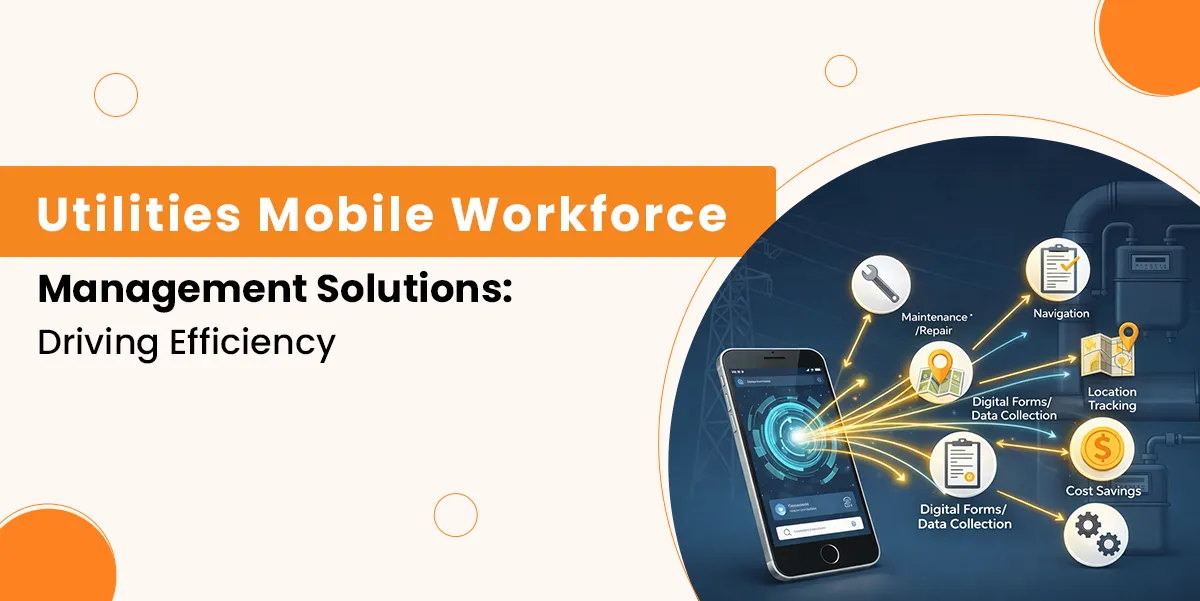
The utility sector operates field personnel management through their utilities mobile workforce management systems, which also track their tasks and utility assets.
The system offers a single platform that enables users to track their work progress while scheduling their tasks and creating instant reports.
The operational tools serve as software programs that function alongside their operational frameworks to handle regular business activities, team operations, and customer support delivery.
The system handles all maintenance needs, including both standard upkeep and urgent repair requirements.
These solutions offer teams visibility into their operations, which helps them stop delays and errors while they finish their work efficiently.
Key functions include:
- Tracking field staff locations and activities
- Scheduling jobs based on priority and capacity
- Monitoring performance and service delivery
- Collecting data on completed tasks for reporting and compliance
Why Utilities Mobile Workforce Management Solutions Matter
Utilities rely on timely and accurate service. Without proper management, delays can cause dissatisfaction and operational inefficiencies. Utilities mobile workforce management solutions address this by providing tools to:
Improve Workforce Productivity
Staff members who work in the field avoid long travel times and do not have to wait for directions before starting their work.
Scheduling tools optimise routes, which helps technicians reach their work locations at faster speeds.
Teams that receive specific assignments and appropriate resources will achieve better results within their standard work period.
Enhance Customer Service
Customers need organisations to deliver fast updates alongside effective solutions to their problems.
Mobile workforce management solutions enable companies to send clients notifications which include technician arrival times, progress updates, and job completion status.
Accurate tracking systems enable businesses to maintain customer happiness, which eventually leads to customer loyalty.
Reduce Operational Costs
The solutions work to lower business expenses through their ability to decrease fuel consumption, shorten travel distances, and reduce waiting times.
The managers need to distribute their resources properly because each field agent must reach their maximum working potential.
Core Features of Mobile Workforce Management Solutions for Utilities
Utility Workforce Scheduling Tools
The utility sector depends on efficient scheduling as its operational base for conducting successful field operations. Managers in utility workforce scheduling systems can assign work assignments to specific staff members who possess suitable skills and reside in appropriate locations and have available working hours.
The system operates through automated allocation tools, which protect every task from being either forgotten or duplicated. Managers can achieve better productivity results through their work distribution system because they handle emergency work first and then distribute tasks evenly to prevent staff exhaustion.
The system operates through automated schedules, which stop people from making mistakes while keeping work flowing properly with no responsibility mix-ups. The scheduling tools provide supervisors with emergency management capabilities by enabling them to create new schedules for weather disruptions, unexpected customer requests, and emergency situations, which protect their service operations from any possible interruption.
The strategic scheduling system minimises operational downtime while it boosts team productivity, which leads to higher overall organisational performance.
Real-Time Tracking and Reporting
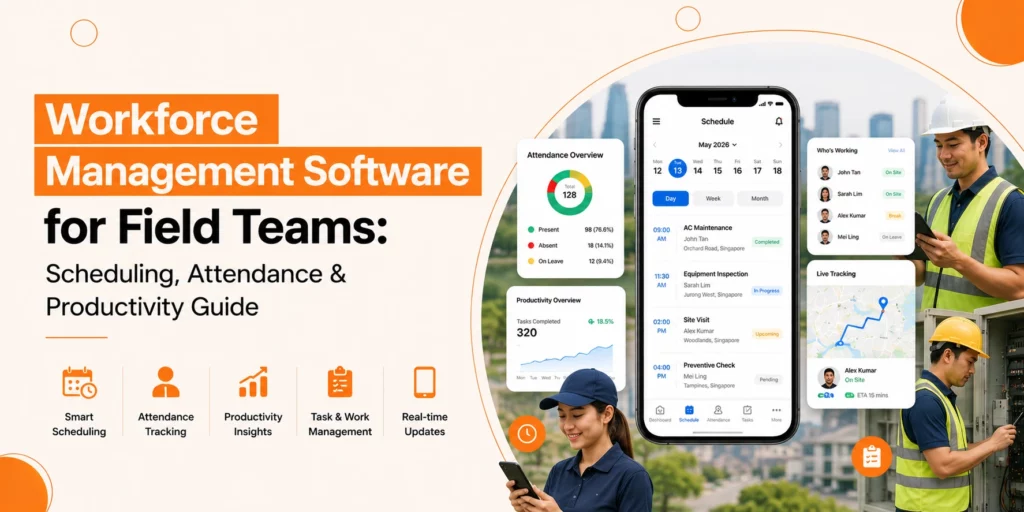
Utility companies need to track their field workers because they operate multiple locations and maintain various team operations. The system provides managers with real-time tracking and reporting tools, which enable them to monitor progress continuously without needing to depend on phone updates or manual reporting.
Field staff members can immediately update their task progress through mobile devices, which enables supervisors to monitor their current work accurately.
The system enables fast detection of process blockages, unexpected problems, and time-consuming delays. Managers have the authority to change routes, and they can give new assignments to their staff members and offer direction that helps their groups complete their tasks on schedule.
Organisations gain better transparency through this system, which enables their staff members to track their work progress. Employees must maintain their scheduled work times while delivering quality service because management monitors their progress checkpoints.
Task and Work Order Management
The operational success of field work depends on correct task and work order management systems, which distribute work assignments properly to all team members.
Workforce management software enables teams to view complete job details, which show all project requirements together with their assigned importance and scheduled completion dates.
The system allows field workers to record their finished tasks, while they can upload pictures and create reports which stay within the system. The system provides all stakeholders, including managers and clients, with up-to-date data, which prevents any form of communication errors.
The system provides instant updates, which allow users to report equipment failures and dangerous conditions that show up at their work locations.
Organisations achieve shorter response times through centralised work order management, which enables better team coordination and results in improved service delivery trustworthiness.
Asset and Equipment Management
Utilities often manage complex assets, including pipelines, meters, transformers, and vehicles. Asset and equipment management features track usage, schedule routine maintenance, and maintain compliance records.
This prevents equipment downtime and ensures safety standards are consistently met. Field workers can report asset conditions in real time, allowing for proactive maintenance rather than reactive repairs.
Managers gain insights into resource allocation, usage patterns, and lifespan projections, supporting cost efficiency and operational planning.
Analytics and Performance Insights
The field operations data collection process generates extensive information which reveals how employees work, how services operate, and what recurring problems exist. Managers use analytics and performance insights to identify emerging patterns that help them assess worker output and discover specific areas that require improvement.
Organisations can use predictive analytics to forecast their future work requirements and resource needs, but reports provide useful data that helps organisations create their strategic plans.
The gathered information leads to improved operational performance while companies achieve better scheduling and maintain excellent service for every utility operation.
Benefits of Utilities Mobile Workforce Management Solutions
Streamlined Operations
Centralised tools connect scheduling systems with asset management software and reporting solutions through a single interface. Teams switch their time from manual coordination to actual task execution.
Improved Accountability
The system records every task that team members perform, which enables managers to track their work activities.
The system allows managers to monitor their staff members’ finished assignments, together with their compliance with rules and their speed of answering questions.
Better Communication
Field teams and back-office staff stay connected through immediate updates and built-in messaging systems, which enable them to maintain continuous communication.
The system enables quick resolution of queries while providing immediate escalation options for pressing problems.
Enhanced Decision Making
Workforce data analysis allows businesses to develop superior plans that optimise resource distribution and enhance emergency response operations and infrastructure building for the future.
Scalability for Growing Operations
The growing workforce needs mobile solutions which should support additional staff members, expanded service areas, and new service offerings while keeping business operations intact.
Best Practices for Implementing Mobile Workforce Management
Start with Clear Objectives
The system requires identification of main operational challenges, which include its poor scheduling capabilities, its slow response times, and its problem with asset tracking.
The solution needs to start with solving these particular issues that exist at the beginning.
Train Field Staff Thoroughly
The correct use of tools by people becomes necessary because all tools lose their value when users handle them incorrectly.
Field teams need to learn about task updates, issue reporting, and mobile interface operation through specific training sessions.
Integrate with Existing Systems
Workforce solutions need to establish connections with customer databases, billing systems, and maintenance logs for proper operation.
The process of integration helps organisations avoid duplicate work while providing better data precision.
Monitor and Iterate
Performance metrics, together with feedback, need to be reviewed at regular intervals.
The system needs to optimise its operational effectiveness through changes that will affect both work systems, scheduling methods, and reporting systems.
Focus on User Experience
The design should maintain basic operation through its simple interface. The field team needs to update their work assignments, while they should access their scheduled work and vital operational data through an easy-to-use system.
Use Cases of Mobile Workforce Management Solutions
Emergency Repairs
In case of outages or leaks, teams can be dispatched instantly. Managers view real-time locations and assign the closest available personnel, reducing response time.
Routine Maintenance
Scheduled inspections of meters, pipelines, or electrical equipment can be efficiently assigned and tracked, ensuring no asset is overlooked.
Customer Service Management
Technicians can update service completion, upload photos, and collect feedback, improving transparency and accountability.
Compliance and Reporting
Field reports are standardised and automatically stored, ensuring regulatory compliance and accurate documentation.
Choosing the Right Utilities Mobile Workforce Management Solution
Selecting the ideal utilities mobile workforce management solution requires careful consideration of multiple factors. Making the right choice ensures efficient field operations, improved customer service, and reduced operational overhead.
Scalability
Evaluate whether the solution can grow with your workforce. As teams expand, the system should handle additional users, locations, and service types without slowing down or becoming complicated. Scalable solutions prevent the need for costly replacements as your operations grow.
Real-Time Tracking and Reporting
Ensure the solution provides accurate real-time updates on field personnel and task progress. This capability allows managers to monitor operations, identify bottlenecks, and make immediate adjustments to maintain productivity.
Integration Options
Check whether the system integrates seamlessly with existing tools such as billing software, asset management platforms, and CRM systems. Integration reduces duplicated work and improves operational efficiency.
Ease of Use and Data Security
Confirm that field personnel can navigate the system easily. Additionally, ensure the platform maintains high data security standards to protect sensitive operational information.
By focusing on these criteria, utility companies can choose solutions that optimise performance, improve workforce coordination, and maintain safe, reliable operations.
Also Read: What Is Mobile Workforce Management?
Conclusion
Overall, Utilities mobile workforce management solutions are essential for modern utility companies. They streamline scheduling, improve accountability, and allow field teams to operate efficiently.
With tools such as utility scheduling tools, mobile solutions for utility teams, or utility field workforce apps, productivity can be enhanced, costs can be reduced, and timely service delivery can be ensured. Also, companies can benefit from real-time tracking, automated work order management, and integrated analytics to make better decisions and maintain high service standards.
By implementing these solutions with clear objectives, proper training, and integration into existing systems, utility providers can optimise field operations and deliver consistent value to customers.
FAQs
They are systems designed to manage field personnel, tasks, and assets efficiently, improving scheduling, reporting, and service delivery in the utility sector.
They optimise scheduling, provide real-time updates, streamline workflows, and reduce travel and idle time for field staff.
Yes, they can integrate with billing, customer management, and asset tracking systems for seamless operations.
Key features include work order management, asset tracking, analytics, real-time location tracking, and communication tools.
Yes, mobile workforce management solutions are scalable and can accommodate both small teams and large field operations efficiently.