











The HVAC industry is changing fast. Customers expect quick service, accurate updates, and smooth communication from the moment they book a job until the final invoice arrives. At the same time, HVAC businesses need to manage more jobs, more technicians, and more customer requests without increasing administrative work.
This is where HVAC field service management software becomes valuable. It brings your daily operations into one place, making it easier to schedule work, track jobs, manage technicians, and keep customers informed.
However, not every system offers the same value. Some focus on basic scheduling, while others support complete business operations.
This guide explains the key HVAC field service management software features to look for in 2026. It also includes a practical buyer’s checklist to help you choose the right solution for your business.
What Is HVAC Field Service Management Software?
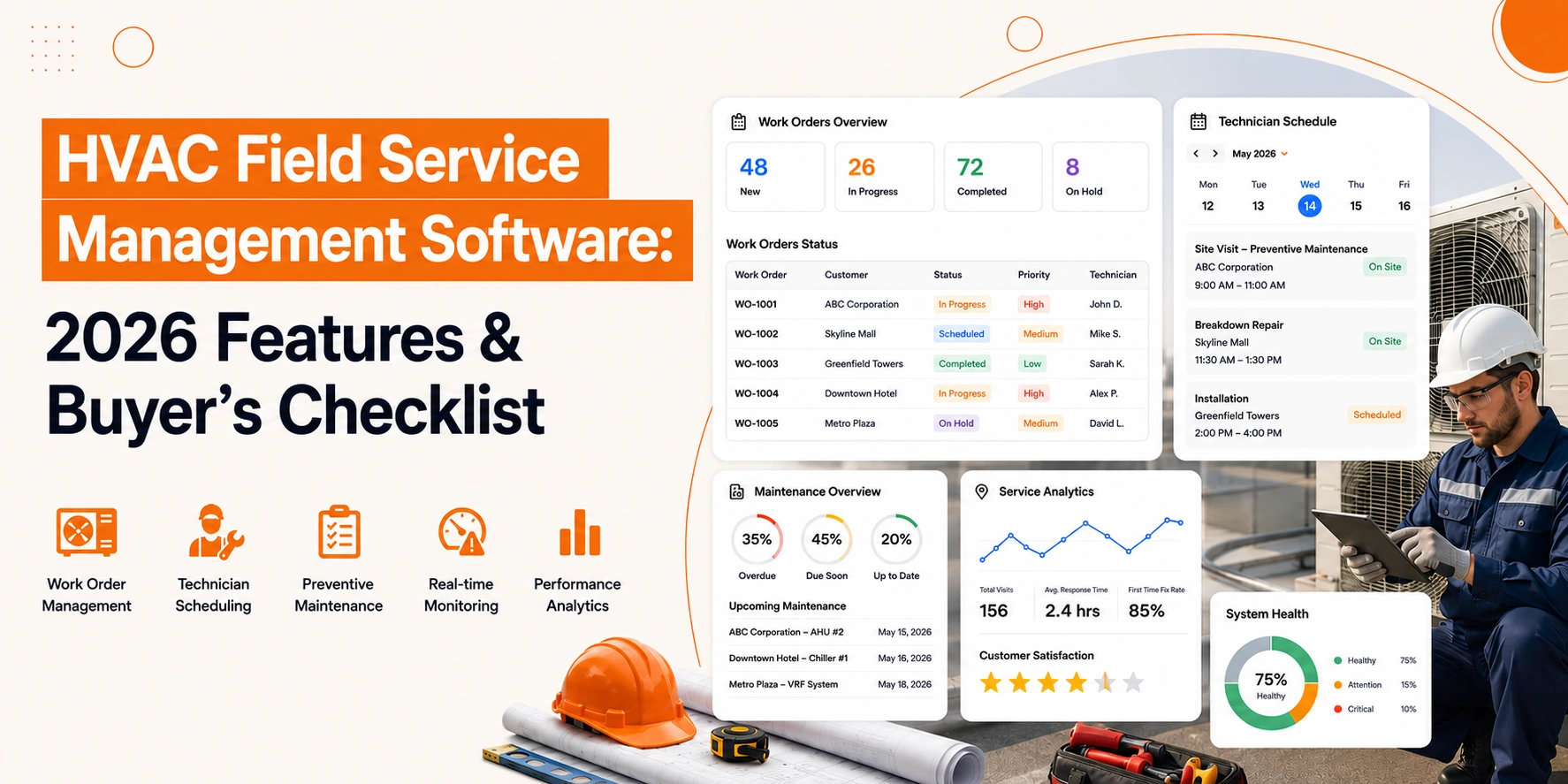
HVAC field service management software is a digital platform that helps HVAC companies manage field operations from a single system.
Instead of relying on paper forms, spreadsheets, phone calls, and separate applications, businesses can organise their work through one platform.
A typical system helps with:
- Job scheduling
- Technician dispatch
- Customer records
- Estimates and invoices
- Work order management
- Inventory tracking
- Reporting
The goal is simple: spend less time on administration and more time serving customers.
Whether you run a small team or manage several crews, the right software creates a smoother workflow.
Why HVAC Businesses Need Better Field Service Tools in 2026
The expectations of customers continue to rise.
They want:
- Fast appointment booking
- Accurate arrival times
- Digital invoices
- Easy communication
- Reliable service
At the same time, business owners face different challenges.
These include:
- Labour shortages
- Rising operating costs
- More maintenance contracts
- Increased competition
- Growing paperwork
Without the right system, these problems slow down daily operations.
Modern HVAC field service software helps reduce these issues by improving visibility across every stage of the job.
Office staff know where technicians are.
- Technicians receive job details instantly.
- Managers can monitor work as it happens.
- Customers receive better service.
- Everyone stays connected.
What are the Essential HVAC Field Service Management Software Features
Not every platform offers the same capabilities. Before making a decision, check whether the software includes these important features.
Smart Scheduling and Dispatch
Scheduling sits at the centre of every HVAC business.
A good system should allow dispatchers to assign jobs based on:
- Technician location
- Skills
- Availability
- Priority level
Modern HVAC technician scheduling software should also reduce double bookings and improve route planning. This means technicians spend more time completing work instead of travelling between jobs.
HVAC Work Order Management
Every service visit starts with a work order.
Strong HVAC work order management helps teams organise every stage of the repair or installation process.
Each work order should include:
- Customer details
- Equipment information
- Job history
- Required parts
- Notes
- Photos
This gives technicians the information they need before arriving on site. It also improves communication between office staff and field teams.
Real-Time Job Tracking
- Customers appreciate updates.
- Managers need visibility.
- Technicians need clear instructions.
A reliable HVAC job tracking system allows everyone to stay informed.
Managers can:
- Monitor technician progress
- Track completed work
- Review delays
- Reassign urgent jobs
Customers also benefit from accurate arrival updates, helping build trust and improve satisfaction.
Mobile Access for Technicians
Field teams spend most of their day away from the office.
Mobile access allows technicians to:
- View work orders
- Update job status
- Capture customer signatures
- Upload photos
- Complete inspection forms
Offline access is also important.
Some locations have poor internet coverage, so technicians should still be able to complete their work without interruption.
Customer Information in One Place
Every customer interaction matters.
Instead of searching through emails or paper files, technicians should have instant access to:
- Contact details
- Service history
- Installed equipment
- Previous repairs
- Warranty information
This helps technicians make informed decisions and provide better service.
Inventory Management
Running out of parts creates delays.
Keeping too much stock increases costs.
A good inventory system tracks:
- Parts availability
- Vehicle stock
- Warehouse inventory
- Purchase orders
This reduces wasted trips and keeps technicians prepared.
Estimates, Invoicing, and Payments
The job does not end when repairs are complete.
Businesses also need fast billing.
Modern field service software for HVAC should allow technicians to:
- Create estimates
- Generate invoices
- Record payments
- Send receipts
Digital invoicing also improves cash flow because customers receive invoices immediately.
Reporting and Business Insights
Good decisions depend on good information.
Reports should help managers understand:
- Technician productivity
- Job completion rates
- Revenue
- Customer trends
- Response times
These insights make it easier to improve daily operations and identify areas for growth.
What are the Benefits of Using HVAC Field Service Software
Choosing the right HVAC field service software offers benefits across the whole business.
Better Productivity
- Office staff spends less time updating spreadsheets.
- Technicians receive work instantly.
- Managers can monitor progress without making constant phone calls.
Faster Customer Service
- Jobs can be assigned more quickly.
- Emergency calls receive faster responses.
- Customers receive updates throughout the visit.
Improved Communication
- Everyone works from the same information.
- This reduces confusion between technicians and office staff.
Fewer Administrative Tasks
Many manual tasks become automated.
This includes:
- Scheduling
- Invoicing
- Work order updates
- Appointment reminders
Less paperwork means more time for customers.
Higher Customer Satisfaction
Clear communication, reliable arrival times, and faster service all improve the customer experience.
Happy customers are more likely to return and recommend your business.
What is the HVAC FSM Buyer Checklist 2026
Choosing software is a long-term investment. Before making a decision, use this HVAC FSM buyer checklist 2026 to compare your options.
Ease of Use
The system should be simple for both office staff and technicians. Complex software often leads to poor adoption.
Mobile Experience
Technicians should complete their daily work from a mobile device without difficulty. Offline functionality is also worth checking.
Scheduling Flexibility
Look for software that supports:
- Drag-and-drop scheduling
- Route planning
- Skill-based assignments
- Emergency dispatch
Strong HVAC technician scheduling software saves time every day.
Work Order Management
Check how the platform handles HVAC work order management.
Can technicians:
- Upload photos?
- Add notes?
- Capture signatures?
- Update job status?
These features improve record-keeping.
Customer Management
Customer information should remain organised and easy to access.
Look for:
- Service history
- Equipment records
- Previous invoices
- Communication history
Job Tracking
A reliable HVAC job tracking system should provide live updates on every job. Managers need visibility without calling technicians throughout the day.
Reporting
Choose software with reports that are easy to understand.
Useful reports include:
- Revenue
- Completed jobs
- Response times
- Technician performance
Scalability
Think beyond today’s business.
Can the software support:
- More technicians?
- More vehicles?
- More locations?
A scalable system prevents expensive replacements later.
Security
Customer information must remain secure. Check whether the platform offers:
- User permissions
- Data backups
- Secure access
Customer Support
Even the best software requires support.
Before buying, ask about:
- Training
- Onboarding
- Technical assistance
- Help documentation
Good support reduces disruption during implementation.
What are the Common Mistakes When Choosing HVAC Software
Many businesses focus only on price.
This often leads to disappointment. Avoid these common mistakes.
Choosing Too Many Features
- A long feature list looks impressive.
- However, features only matter if your team uses them.
- Choose software that matches your daily workflow.
Ignoring Technician Feedback
- Technicians use the software every day.
- Include them in the buying process.
- Their feedback helps identify practical issues before implementation.
Forgetting Future Growth
Your business may double in size over the next few years.
Choose software that can grow with your company.
Skipping Training
Even simple systems require proper training.
Give both office staff and technicians enough time to learn the platform.
What Will HVAC Field Service Management Look Like in 2026?
HVAC businesses are facing higher customer expectations, growing workloads, and increasing pressure to improve efficiency. As a result, HVAC field service management software is expected to become more capable of supporting day-to-day operations while simplifying field service management.
Smarter Scheduling and Dispatch
The upcoming scheduling tools will support businesses to assign work based on their technician expertise, their availability, their current position, and the task importance. The system reduces travel distances, so it enables faster emergency responses.
Better Mobile Support
Field technicians need to access their work information through mobile devices, which remains their essential tool for operations. The system allows users to track work orders while they update their job progress and obtain customer approval through signature capture, and view equipment maintenance records at any time from any place with restricted internet access.
Improved Reporting and Job Visibility
The reporting tools will show better information about how technicians work and which tasks they finished, how they served their customers, and how fast they responded. Businesses need to use this information to create better strategies that help them run their daily operations more effectively.
Connected Equipment Records
Technicians can solve problems faster because they get to see all equipment records, service documents, and warranty details during their service visits, which leads to better maintenance service.
Overall, future field service management system will focus on reducing manual work, improving communication, and helping HVAC businesses deliver faster, more reliable service while preparing for long-term growth.
Conclusion
Overall, the selection process for HVAC field service management software requires businesses to establish their needs at the start instead of simply choosing software that replaces their current paper-based systems. The process demands the development of an enhanced method that will handle all operational activities at your business.
The right solution enables businesses to unite their scheduling and dispatch operations with HVAC work order management and reporting systems and customer communication channels.
The HVAC FSM buyer checklist 2026 requires you to study it before you make your decision about choosing the best features for your work activities and plans.
A business system that provides simple operation for technicians and shows vital operational data will enable you to deliver superior service while boosting your operational efficiency and preparing your business for upcoming expansion.
The business needs to buy dependable field service software for HVAC because customer needs keep evolving, which requires the company to maintain its organisation and quick response abilities for future market opportunities.