










Retail workforce management plays an important role in ensuring stores run efficiently, staff are well-coordinated, and customers receive a consistent, high-quality experience. By using the right tools and best practices, retailers can optimise scheduling, manage labour costs and improve staff performance with far greater accuracy.
Modern retail workforce management software replaces manual processes with smart automation, real-time insights and data-backed decision-making.
From demand forecasting and compliance control to performance tracking and seamless integrations, an effective workforce management approach helps retailers stay agile, productive and competitive in a fast-paced market.
What is Retail Workforce Management?
Retail workforce management refers to the processes and system which is used to manage, monitor, and optimise the staff within the retail environment.
It covers scheduling, attendance tracking, employee performance evaluation and more to make sure the efficient allocation of resources to meet business needs.
How Retail Workforce Management Software Helps in Retail Scheduling?
Retail workforce management (WFM) software converts the slow and manual job of retail scheduling into a smart and data oriented operations. Let’s understand how the system helps in retail scheduling below:
1. AI-Driven Demand Forecasting
It helps in reviewing past sales, footfall patterns and outside factors like weather or local events to predict the staff needs. Basically, it helps managers to match labour levels by expected customer flow.
2. Regulatory Compliance & Risk Mitigation
The system applies local labour rules, such as rest breaks and hour limits, directly to schedules by highlighting issues before they become violations and avoiding costly penalties.
3. Real – Time Adjustments
When someone calls in sick, or customer numbers rise unexpectedly, managers can send open shift alerts to suitable staff through the app.
4. Labour Cost Control
Managers can track labour spending against the budget in real time. Predictive alerts warn them before overtime builds up, which helps to protect retail margins.
How Retail Workforce Management Software Assists in Performance Tracking?
Retail Workforce Management software offers a central, data-driven system to track and improve employee performance. Let’s understand how it helps in performance tracking and more, as defined below:
1. Automated Performance Reports
So, instead of depending on manual check the system creates regular reports on individual and team performance. This helps in highlighting top performers for recognition and finding staff who may need extra training or support.
2. Task Management & Progress Tracking
Many WFM retail systems include task modules that allow managers to assign duties like restocking or cleaning. Also, help in tracking progress in real-time. This keeps the frontline team productive even during quieter periods.
3. KPI Tracking
The system monitors key retail metrics such as sales per hour(SPH), conversion rates abd average transaction value(ATV). Managers can use live dashboards to see exactly which staff members are performing well at any moment.
4. Data-Driven Appraisals
Performance reviews become more objective when based on hard data like revenue per employee or customer satisfaction(CSAT), which is collected directly from the WFM system
Best Practices of Workforce Management
To maximise your ROI, you should follow the practices below to utilise WFM inthe best manner:
1. Form a Workforce Management Team
- Look for a person who has experience in HR, payroll, and attendance
- Include operations leaders who understand frontline labour and daily workflows
- Add people to the team with strong project management, decision-making, and problem-solving abilities.
- Include a person who is good at communication, along with the IT specialists who can support system integrations.
2. Maximising Adoption Through Effective Change Management
- Create a global change team with strong regional input
- Build localised training programmes suited to users in each market
- Set up a feedback loop to refine the rollout as you go
- Provide clear communication plans to keep all teams informed and aligned
3. Enhance Solution through Rigorous Testing
- Deliver solution training so testers can tell the difference between the system errors and gap in user understanding
- Run a pay comparison test to see how system changes affect payroll, which improves accuracy when rules are applied.
- Test integration with HR, payroll and POS systems to make sure data flows smoothly
- Make a record of all findings clearly so fixes can be prioritised before full rollout.
4. Build Compliance into Your Foundation
- Make sure your solution supports local payroll rules, labour laws and tax requirements
- Use existing compliance templates to speed things up.
- Set up a regular review process to keep compliance regularly updated
- Maintain a document of any country-specific exceptions, so nothing is missed later
5. Build a Smooth Systems Integration Plan
- Check data accuracy and ensure the system works smoothly together before launch
- Map key data flows early so integrations are clear and consistent
- Set up monitoring to quickly spot and fix integration issues
- Use sandbox environments to test configurations across countries
Why Genic Teams is the Best WFM tool for Retail Teams?
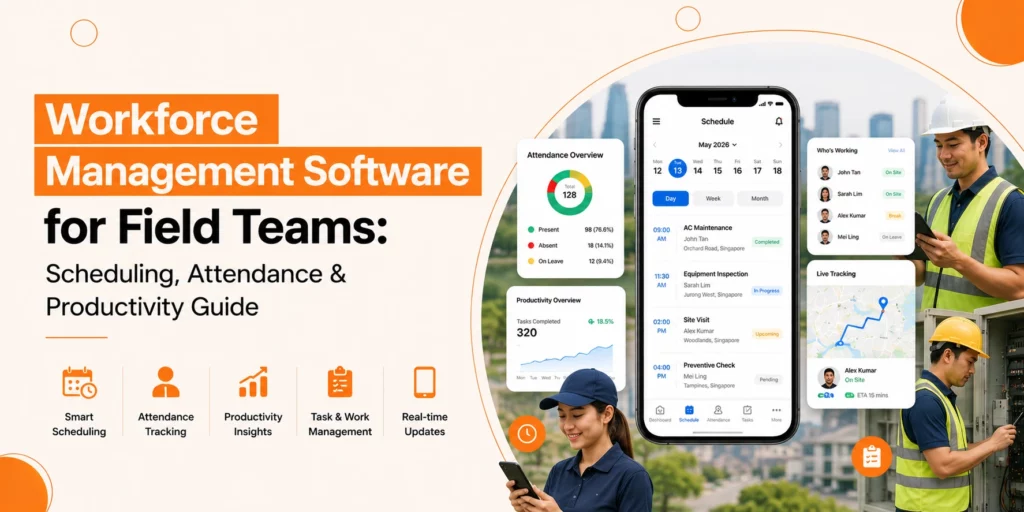
Genic Teams is a modern, end-to-end workforce management platform built to help retailers simplify scheduling, improve productivity and maintain compliance across multiple locations. Our system combines intelligent retail workforce automation, real-time visibility and seamless integrations, making it a strong fit for retailers aiming to optimise labour efficiency and enhance frontline performance.
- Brings scheduling, attendance, tasks and performance data into one central system for clearer, faster decision-making.
- Uses forecasting tools to predict staffing needs based on sales patterns, footfall and peak trading times.
- Applies local labour rules automatically, reducing errors and maintaining regulatory compliance.
- Allows managers to send updates, open shift alerts and changes in real time.
- Offers automated performance reports, KPI tracking and progress monitoring to support coaching and recognition.
- Connects effortlessly with HR, payroll, POS and other core tools for consistent data flow.
- Designed to support growing retail operations with simple workflows and customisable features.
We equip retailers with the retail staff scheduling tools that they need to control labour costs, improve staff engagement and deliver better customer experiences, making it a leading choice for workforce management.
Conclusion
A strong retail workforce management strategy gives businesses the structure and intelligence they need to operate efficiently while supporting their frontline teams.
With features that improve scheduling accuracy, enhance compliance, streamline communication and boost overall performance, WFM systems have become essential for modern retail success.
By following best practices and choosing the right technology partner, retailers can strengthen productivity, reduce costs and deliver better customer experiences across every store location.